
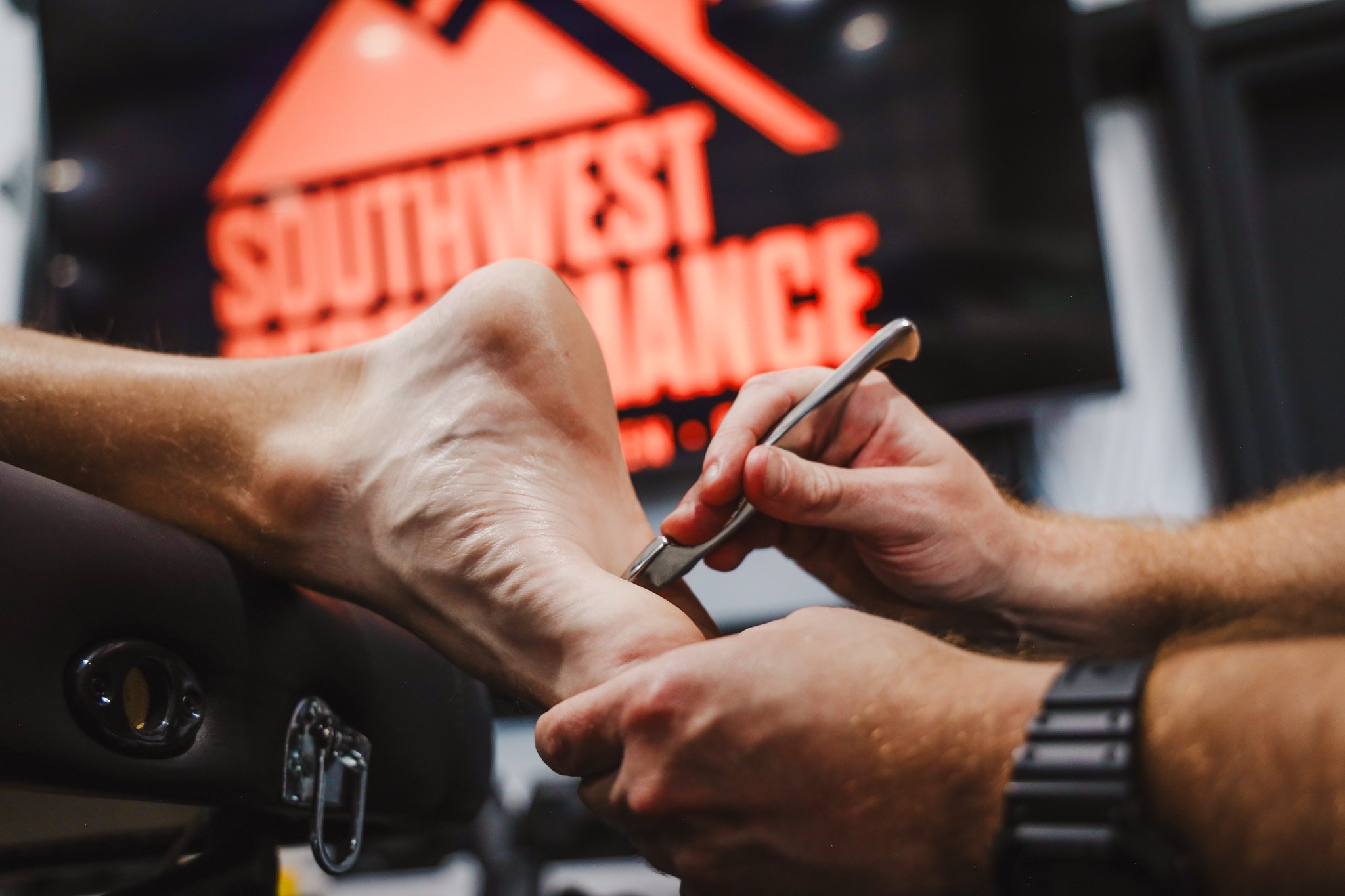
What is scraping?
Scraping, or IASTM, is a manual therapy technique that uses specifically designed handheld tools, typically made of stainless steel with beveled edges. The tools are used with various compressive stroke techniques to detect and treat soft tissue restrictions, including muscle, fascia, tendons, ligaments, and scar tissue. What is the goal of scraping?
The goal is to improve blood flow, mobilize restricted tissue, and stimulate healing so muscles and connective tissue can move and function healthily.What conditions respond well to scraping?
Scraping is effective on a wide range of musculoskeletal conditions. Common conditions treated areChronic and acute muscle tensionLimited joint mobilityOveruse injuriesScar tissue restriction
Treatment effectiveness is often paired with other modalities, like stretching, strength training, or other therapies to optimize outcomes.What should I expect during treatment?
A tool will be applied with firm pressure and technical strokes over affected and adjacent tissue. The sensation often feels like an intense massage, especially over areas of tissue restriction. Mild to moderate discomfort is common, but it should not be unbearable. Your feedback during treatment will help guide intensity.What should I expect after?
Mild redness or soreness is common and usually fades within 24–48 hours. It is common to experience improvements in pain and function immediately, lasting between a few days to a few weeks (cumulative benefits build over strategic treatment frequency). Hydrate and limit intense physical activity to the treated site at least until the soreness subsides.What is the typical treatment frequency?
This is heavily condition dependent, however most conditions respond well to 1–2 treatments per week for 2-4 weeks, then as needed based on how your body is responding.What does scraping feel like?
Scraping often feels mild-moderately uncomfortable, especially over areas of restricted or dysfunctional tissue. As the tissue function is restored and pain decreases, treatment becomes more tolerable.What equipment is used for treatment?
Medical-grade stainless steel IASTM tools, varying in shape, size, and beveled edges.