
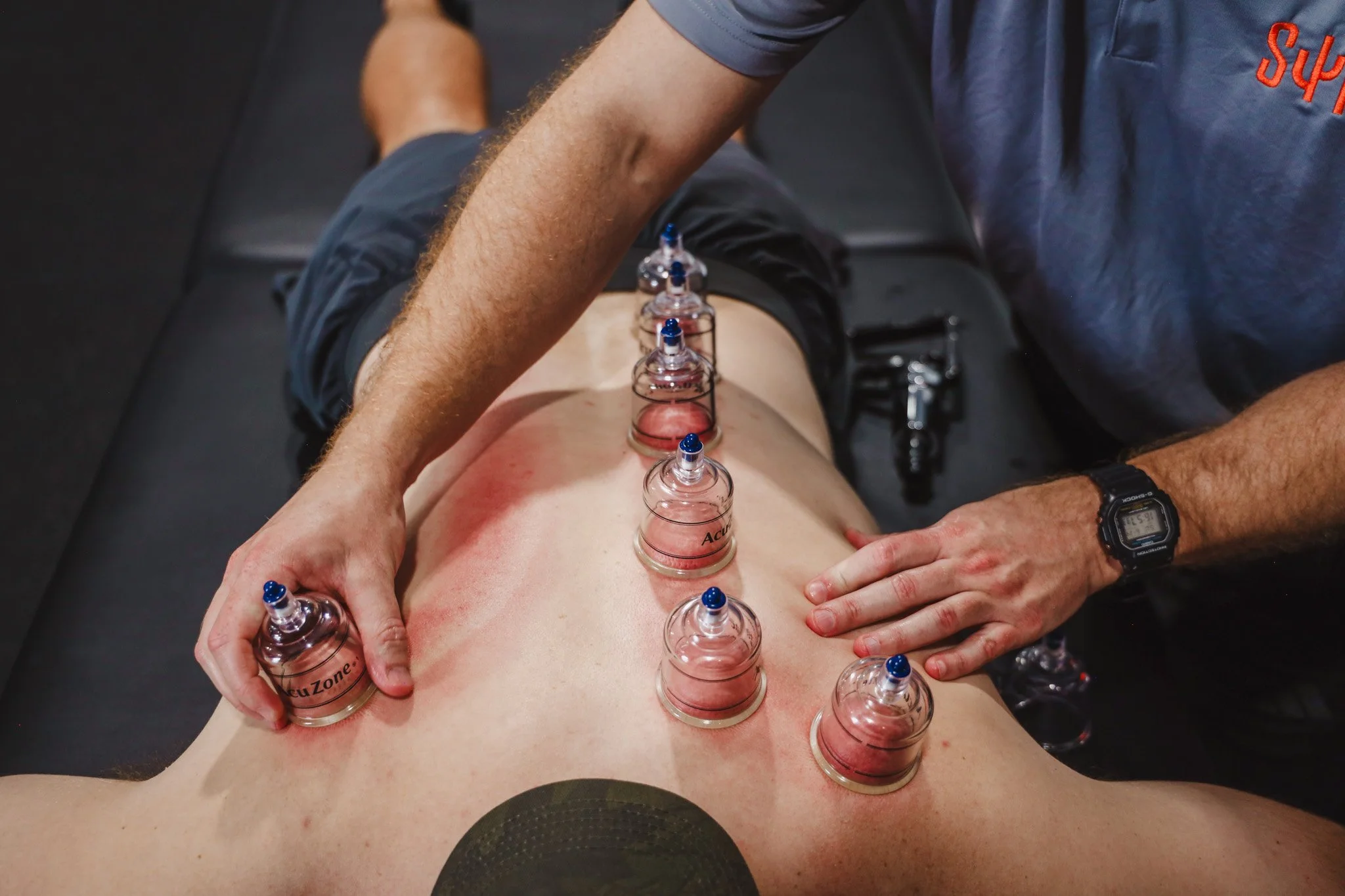
What is Cupping?
Cupping is a treatment that has been around for many, many years and practiced in numerous cultures. Similar to dry needling, cupping is rooted in Eastern medicine. The Eastern medicine approach utilizes it to improve energy flow, while Western medicine uses cupping with the intention of reducing pain and improving myofascial function. What is the goal of cupping?
The main goals of cupping are to increase blood flow to an area, relax tight muscles, reduce pain, and promote the body's natural healing system. It is also believed to help release toxins, reduce inflammation, and calm the nervous system — leaving many people feeling relaxed after a session.What conditions respond well to cupping?
Muscle tensionJoints with limited range of motionAcute and chronic painSports injuries
What should I expect during treatment?
The cups will be applied on and around the affected tissue to maximize effectiveness. They will be handled by gliding across the tissue, or placed stationary on areas that tension and/or tissue restrictions are located.What should I expect after?
Immediate feelings will likely be soreness and fatigue (depending on how many cups and how long they were on). The bruised circles can indicate how healthy your blood flow is underneath the skin. The darker the color (dark red/purple) leans towards a flush of blood due to previous tissue restrictions, while skin-tone colored circles indicate healthy blood flow.What is the typical treatment frequency?
This is dependent on your condition and how your body is responding to treatment. 1-2 per week is typically a good place to start. Ideal frequency will be determined by you and your clinician.What does it feel like?
Cupping often involves some level of discomfort and relief. Although discomfort is common, it should not be unbearable. Your feedback during treatment will help guide adjustments, if necessary.What equipment is used for treatment?
Plastic cups of various sizes, a hand pump, and a high gliding lotion.