
What is blood flow restriction Training (bfrt)?
Blood flow restriction (BFR) training is a specialized exercise technique that uses a cuff, placed around a limb to partially reduce blood flow while you exercise. It allows you to achieve the benefits of high-load exercise using very light load — making it especially useful when you need to manage physical load tolerance due to injury, surgery, or pain.What is the goal of bFRT?
The goal is to improve muscular strength, without putting heavy physical stress on your healing or low-threshold tissues. By restricting blood flow, the muscles are challenged intensely even with light loads, triggering the same growth responses you'd normally only receive from much heavier exercise.What conditions respond well to bFRT?
BFR training works well for a wide range of conditions, including post-operation rehab, muscle weakness from injury or immobility, osteoarthritis, bone fractures, tendon injuries, and age-related muscle loss. It is also used by athletes returning from injury who need to rebuild strength safely.What should I expect during bFRT?
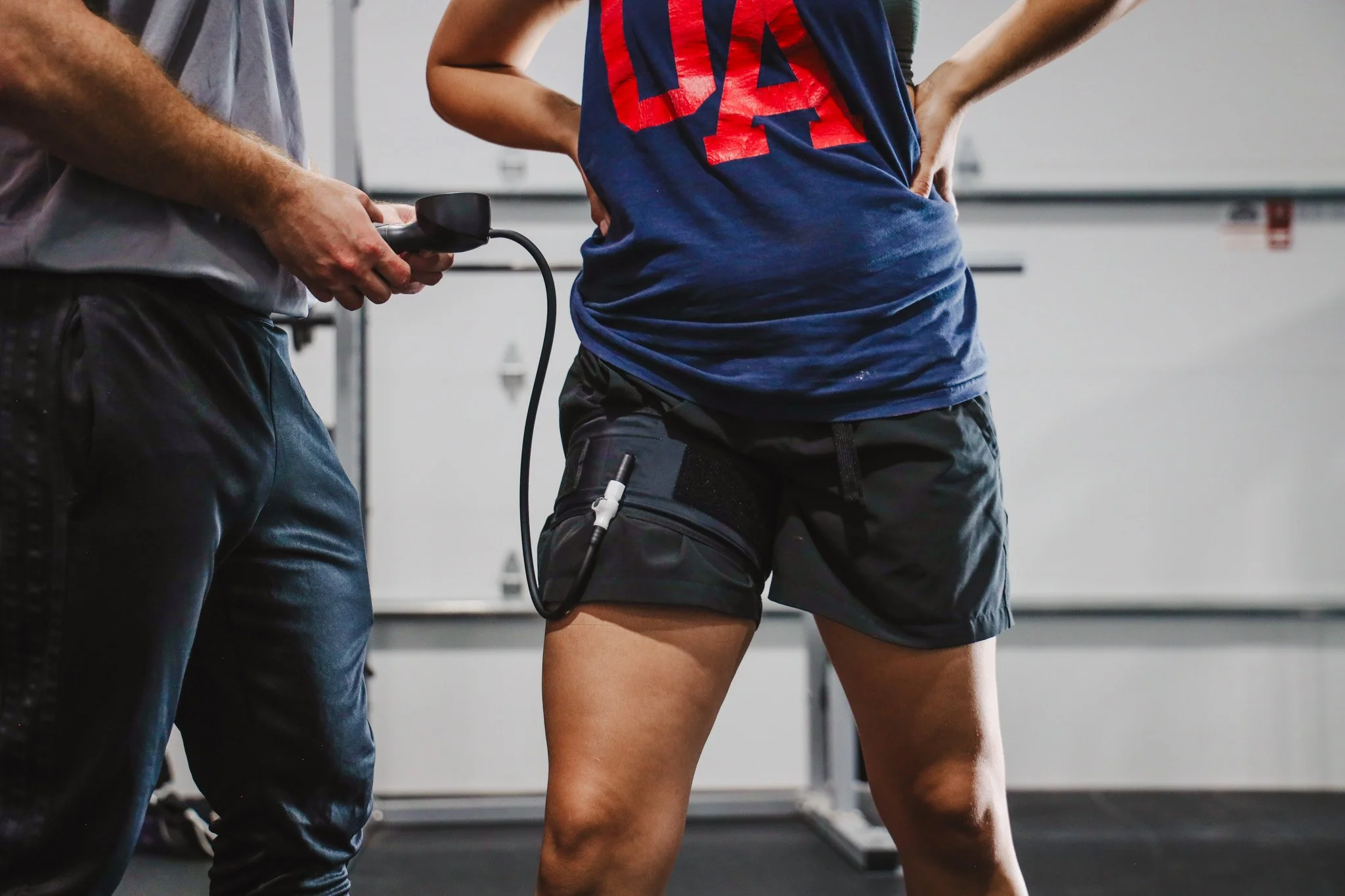
A cuff — similar to a blood pressure cuff — will be placed snugly around your upper arm or upper thigh. You will then perform simple, low-weight exercises respective to the limb involved. Sessions are typically short, lasting around 15–20 minutes. Your clinician will monitor your exercise response throughout the session to ensure your safety.What should I expect after BFRT?
It is completely normal and anticipated to feel a "muscle burn" sensation and noticeable fatigue. Your muscles may feel sore for a day or two, similar to after a regular workout. What is the typical treatment frequency?
BFR training is most commonly performed 1 to 3 times per week. Your clinician will tailor the frequency to your specific condition, fitness level, and goals. As you get stronger, the program will be gradually progressed to continue challenging your body safely.What does BFRT feel like?
Most people describe a deep muscle burn and a feeling of heaviness or tightness in the limb being treated — often more intense than you'd expect from such light exercise. The cuff itself will feel firm and snug but not painful. Some people feel their muscles fatigue very quickly, which is normal and actually part of what makes the technique effective.What equipment is used for BFRt?
The primary piece of equipment is a specialized pneumatic cuff — an inflatable band that wraps around the limb and is inflated to a percentage of your specific limb occlusion pressure (LOP).